GENERAL DESCRIPTION
The genus Fritillaria L. (Liliaceae) comprises approx. 170 taxa distributed through much of the temperate regions of the northern hemisphere, from Europe and North Africa, through Central Asia to China, Japan and Eastern Russia, and connected by the Aleutian Island chain to North America, extending south to New Mexico and east to North Dakota.
Bulbous perennials. Bulb one or more large fleshy scales, sometimes with many small scales, covered with a translucent tunic. Stem simple, erect. Leaves verticillate, opposite, sub-opposite or alternate, linear to ovate, green or glaucous, sessile. Inflorescence solitary, pseudo-umbellate or racemose. Flowers bisexual, usually nodding, perianth campanulate to cupulate; tepels six with segments often tessellated (marked with alternating squares of light and dark colour), many with a longitudinal central stripe or fascia, bract leaves 1-3. Nectaries conspicuous, at the base, or at the angle of inflection of the perianth segments. Anthers linear, attached to filament slightly above base. Style entire, subentire or 3-fid, caducous.
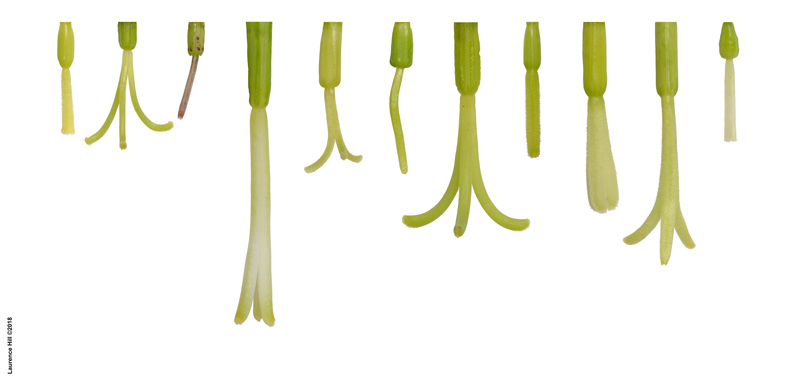
Fritillaria pistils
Fruit capsular, normally held erect, cylindrical, six-angled or winged, tri-valved. Seeds numerous, in two rows per locule; embryo linear underdeveloped. Basic haploid chromosome number x = 12 with x = 9, 11 and 13 also recorded.
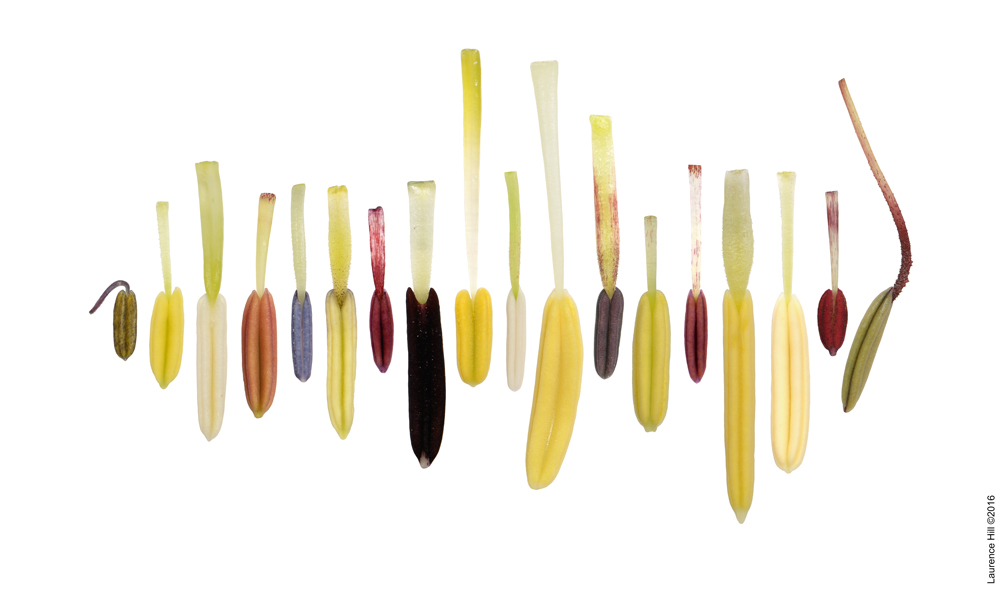
Fritillaria anthers
Habitat: near sea level to 5600 m in grasslands, open woods, scrub, mountain steppe, salt mashers, and seasonally damp meadows, often on limestone substrates or serpentine soils.
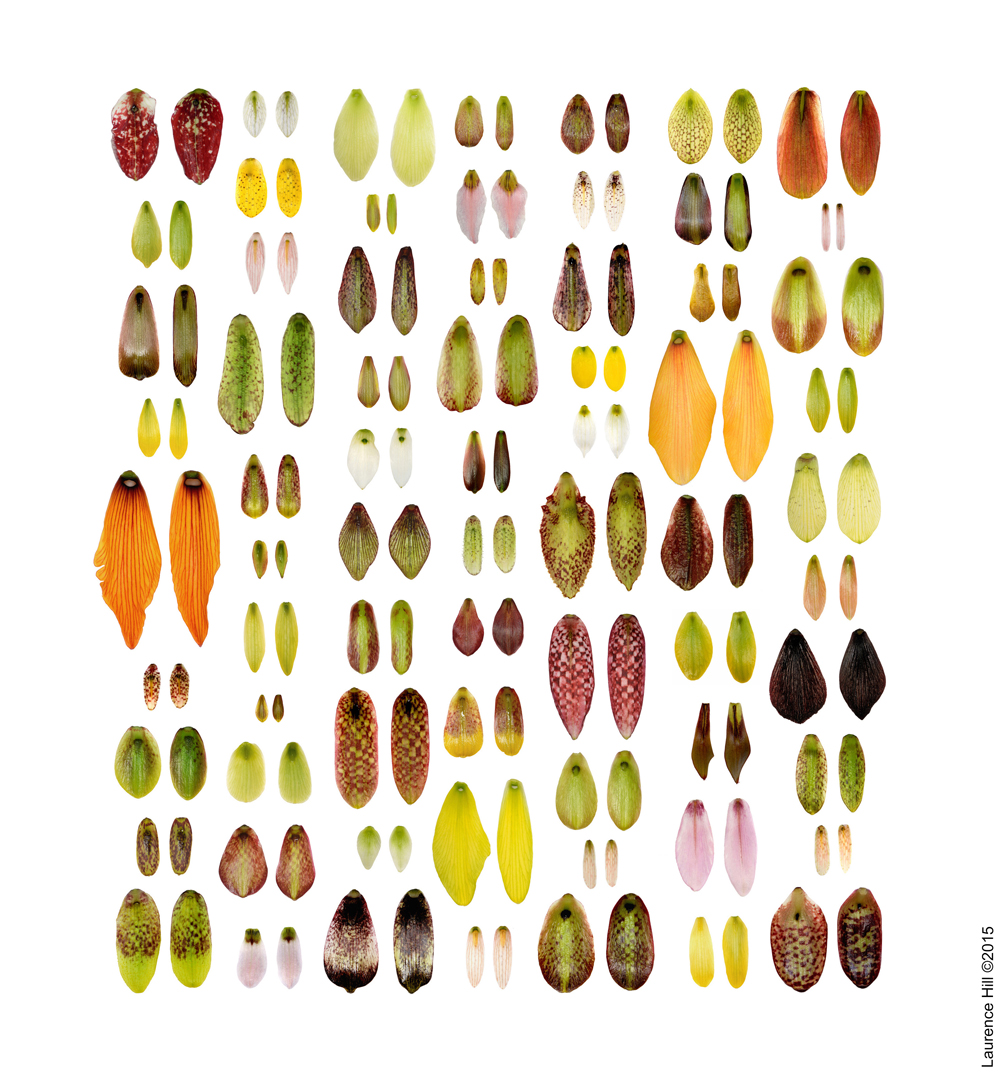
Fritillaria tepals
Flowering period: February to July depending on altitude or latitude, often by melting snow. Many of conservation concern.
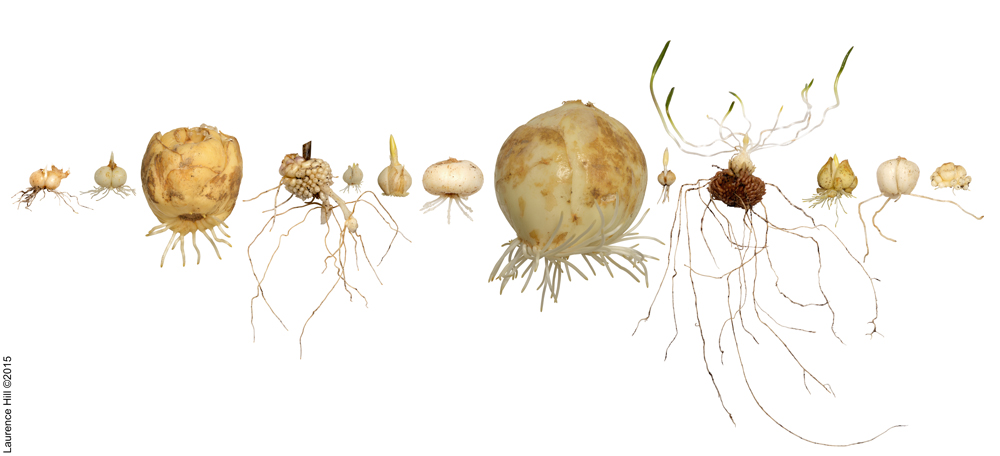
Fritillaria bulbs